
Best AI search visibility tracking tools for SEO teams didn’t exist as a distinct software category two years ago. Now, in 2026, they’re recognized by Gartner as their own space, separate from the rank trackers most SEO teams have used for a decade to watch Google rankings.
The shift makes sense. When someone asks ChatGPT or Google’s AI Overviews a question, there’s no blue link to rank for and no keyword to target in the old sense. What matters is whether your brand gets mentioned or cited inside the answer itself, and that requires a different kind of tracking: daily prompt monitoring, citation analysis, and sentiment scoring across models like ChatGPT, Gemini, Perplexity, and Copilot.
Gartner published its first-ever Market Guide for Answer Engine Visibility Tools in March 2026, a sign of how fast this category has matured from experimental add-on to something enterprise buyers now formally evaluate. At Yaaply, we’ve watched this shift up close: getting cited inside an AI answer depends heavily on the quality and structure of the content these engines pull from in the first place. Below are the 10 tools worth knowing if you’re building out an AI visibility tracking stack in 2026.
1. Profound
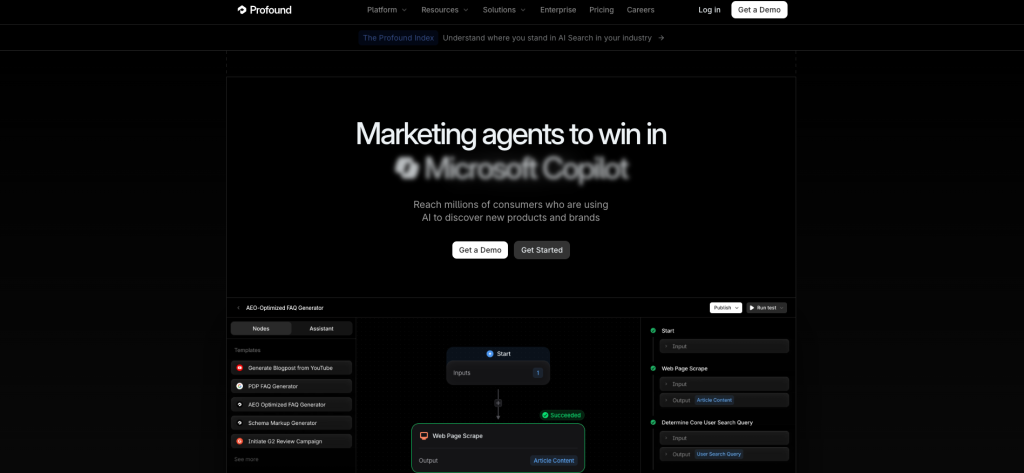
Core Strength: Profound tracks up to 10 answer engines on its Enterprise plan, including ChatGPT, Perplexity, Google AI Overviews, Google AI Mode, Gemini, Microsoft Copilot, Meta AI, Grok, DeepSeek, and Claude, with daily prompt refresh and a “Prompt Volumes” feature that shows what people are actually asking AI engines, not just whether you show up in the answer.
Pricing: Starter is $99/month, but that only covers ChatGPT tracking. Growth is $399/month and adds Perplexity and Google AI Overviews. Full 10-engine Enterprise coverage is custom priced. Most teams that want real multi-engine visibility end up needing Growth or higher, so treat the $99 headline price as an entry point, not the real cost. No free trial is confirmed.
Best Suited For: Enterprise teams and well-funded mid-market brands that need broad engine coverage and share-of-voice benchmarking against named competitors.
Pros & Cons: Prompt Volumes is a genuine differentiator for understanding actual AI search demand, and Profound is the most funded platform in this category, with over $150M raised and a $1B valuation as of February 2026. The catch is the steep jump from the $99 Starter tier to meaningful multi-engine coverage.
2. Peec AI
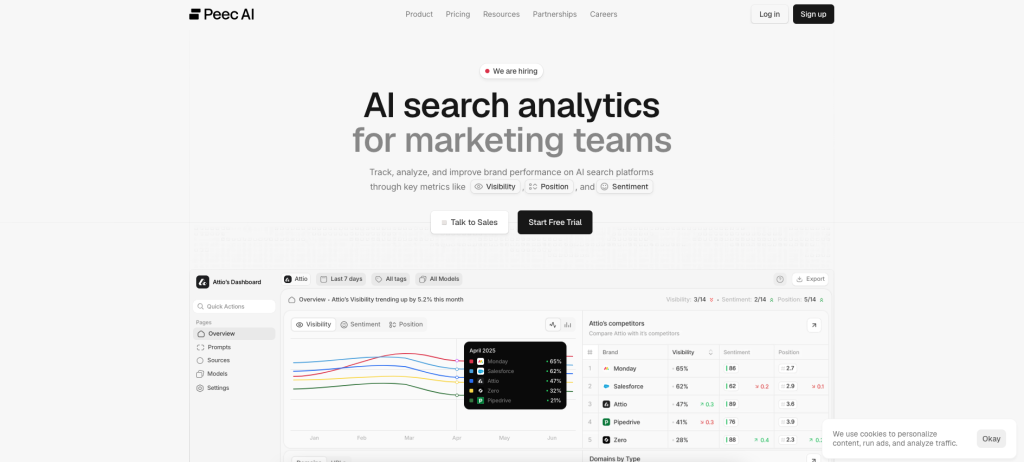
Core Strength: Daily tracking across ChatGPT, Perplexity, Google AI Overviews and AI Mode, Microsoft Copilot, and Gemini, paired with an AI Visibility Score, Citation Intelligence, and content-gap analysis that flags where competitors are winning citations you’re not.
Pricing: Starter runs $89-95/month depending on when and where it’s checked. Pricing appears to fluctuate slightly, so treat this as an approximate range rather than a fixed number, and confirm the live figure before quoting it to a client.
Best Suited For: Mid-market marketing teams that want daily-frequency tracking without an enterprise price tag, especially agencies managing multiple client accounts.
Pros & Cons: A 4.9/5 rating on G2 and 2,500+ marketing teams using the platform points to strong product-market fit, and a 14-day free trial makes it easy to test. The pricing uncertainty is the main drawback when trying to budget precisely ahead of time.
3. Scrunch AI
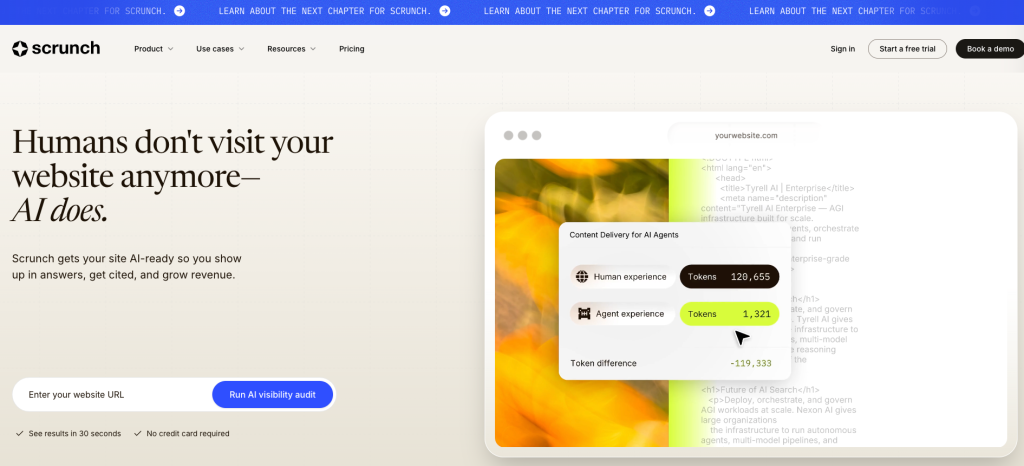
Core Strength: Scrunch organizes its work around three pillars, Monitor, Analyze, and Optimize, combining Prompt Manager, Citations tracking, Page Audits, and Agent traffic monitoring that attributes actual site visits back to AI-driven referrals, a step beyond simple mention tracking.
Pricing: Starter pricing is estimated in the $250-300/month range based on its Growth-tier pricing, but the exact Starter figure was not independently confirmed on the live pricing page at time of writing. Check scrunch.com/pricing directly before quoting this to a client.
Best Suited For: Mid-market and enterprise teams that want to connect AI visibility to actual site traffic, not just citation counts.
Pros & Cons: Scrunch reports being used by 500+ companies and agencies, including Lenovo and Skims, with a client-cited 9x increase in AI-search-driven sign-ups, and a 7-day free trial requires no credit card. The unconfirmed Starter price is a real gap for anyone trying to budget in advance.
4. Otterly.AI
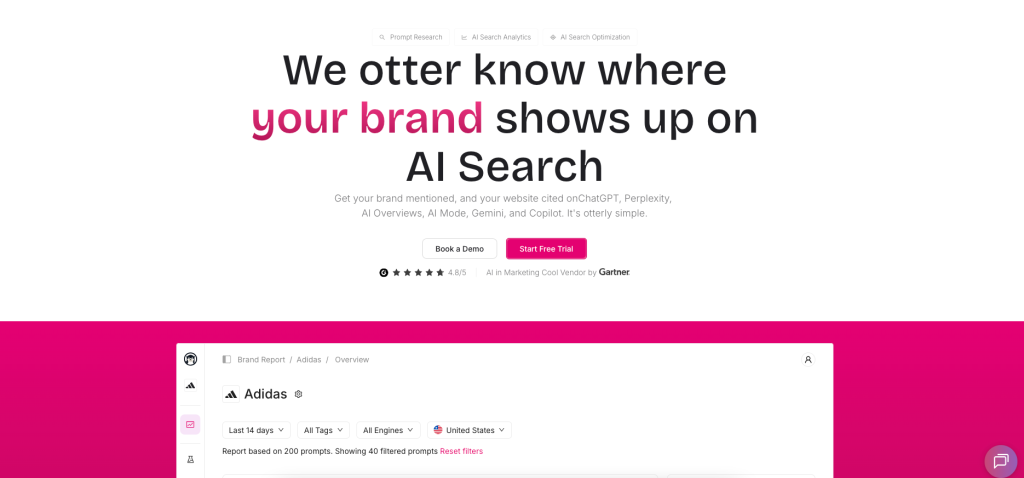
Core Strength: Tracks Google AI Overviews, ChatGPT, Perplexity, Gemini, and Microsoft Copilot (notably not Claude), reporting on mention frequency, sentiment, link citations, and keyword-prompt performance in a straightforward, easy-to-read format.
Pricing: Lite is $29/month for 15 tracked prompts and one workspace, the lowest confirmed entry price anywhere in this category. Standard is $189/month for 100 prompts. A free trial is offered.
Best Suited For: SMBs, solo consultants, and small agencies who want to start tracking AI visibility without committing to a big monthly spend.
Pros & Cons: The Lite tier is genuinely accessible for smaller budgets, and the reporting is clean and simple. The lack of Claude tracking is a real gap if that model matters to your audience or industry.
5. AthenaHQ
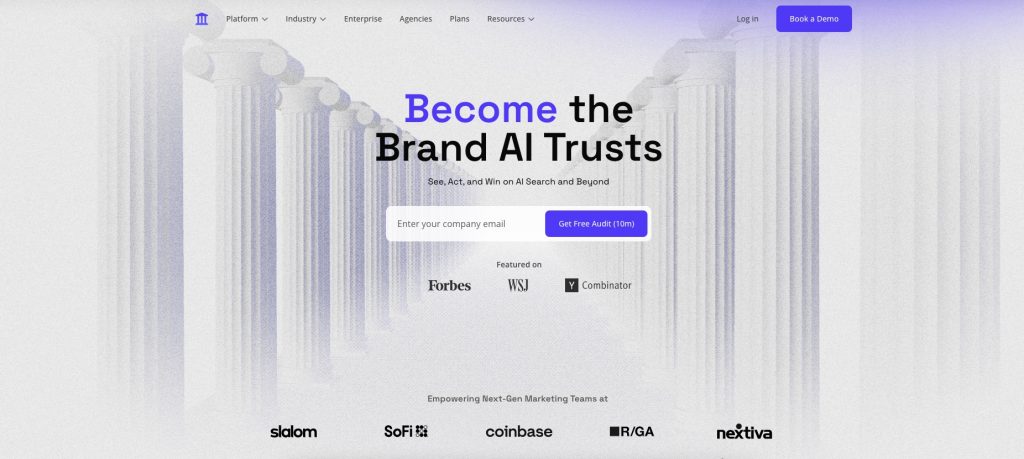
Core Strength: Founded by ex-Google and DeepMind engineers and backed by Y Combinator, AthenaHQ runs ongoing prompt checks across up to 9 AI models, reporting mention rate, citation rate, sentiment, and share of voice against named competitors.
Pricing: Starter (Self-Serve) is $295/month, discounted to $95 for the first month only, which includes $300 in monthly credit. There is no ongoing free tier beyond that first-month discount.
Best Suited For: Data-driven marketing teams and startups that want a technically credible tool with a low-cost first month to test it out.
Pros & Cons: The engineering pedigree and first-month discount make it easy to trial without much risk. The jump back to full $295/month pricing after month one is worth budgeting for upfront.
6. Evertune
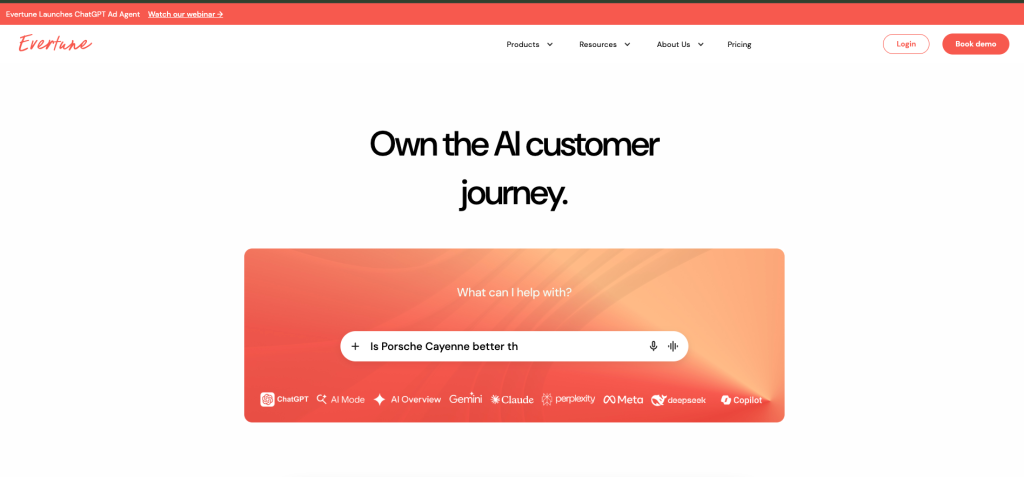
Core Strength: Tracks up to 9 generative engines with model-level brand-perception and sentiment data, but it’s worth knowing this goes beyond a pure visibility tracker. It also includes paid activation through programmatic and affiliate integrations via The Trade Desk, plus content strategy guidance, making it more of a full AI marketing platform than a tracking tool alone.
Pricing: Starts at $3,000/month, sales-led, reportedly with a minimum $36,000/year annual contract. No free trial is available.
Best Suited For: Large enterprises with real marketing budgets that want AI visibility tracking bundled with paid activation and strategy support, not just reporting.
Pros & Cons: Being named a Representative Vendor in Gartner’s first-ever 2026 Market Guide for Answer Engine Visibility Tools is a genuine independent credibility signal. The price and broader scope put it out of reach for most mid-market teams looking for a simple tracker.
7. LLMrefs
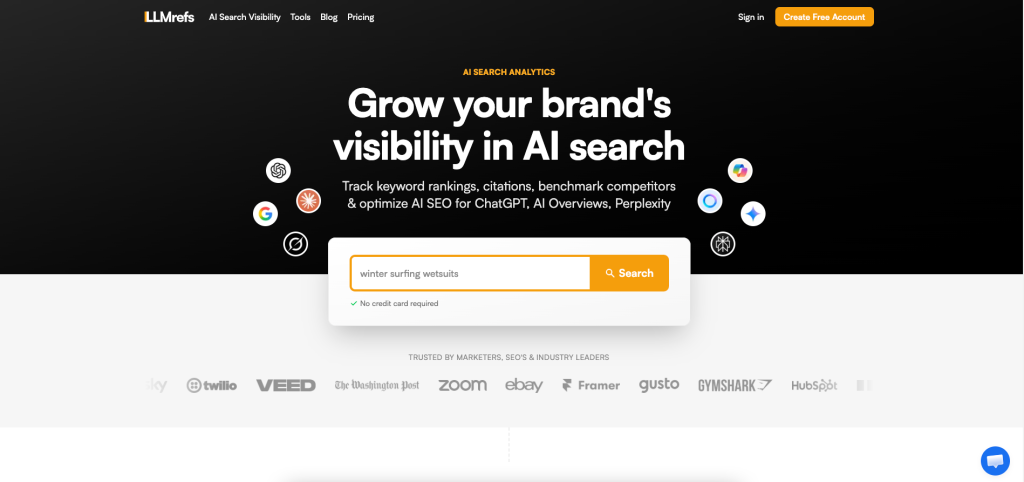
Core Strength: Tracks keyword-style AI rankings and citations across ChatGPT, Google AI Overviews, Perplexity, Gemini, Claude, and Grok, showing exactly which source URLs generative engines are pulling from when they cite you or a competitor.
Pricing: A single All-in-One plan at $79/month includes 500 tracked prompts, coverage across all major engines, and API access. A free account tier is also available. This is one of the simplest, most transparent pricing pages in the category.
Best Suited For: SMBs, solo SEOs, and lean in-house teams that want full-engine coverage without tiered pricing complexity.
Pros & Cons: The flat, transparent pricing is refreshing in a category full of custom quotes. The feature set leans more toward rankings and citations than deeper analytics like sentiment or agent traffic.
If your team is already paying for a legacy SEO suite, the next three tools are worth a look before you add a new vendor. They’re AI visibility add-ons bolted onto platforms you may already use every day.
8. Semrush AI Visibility Toolkit
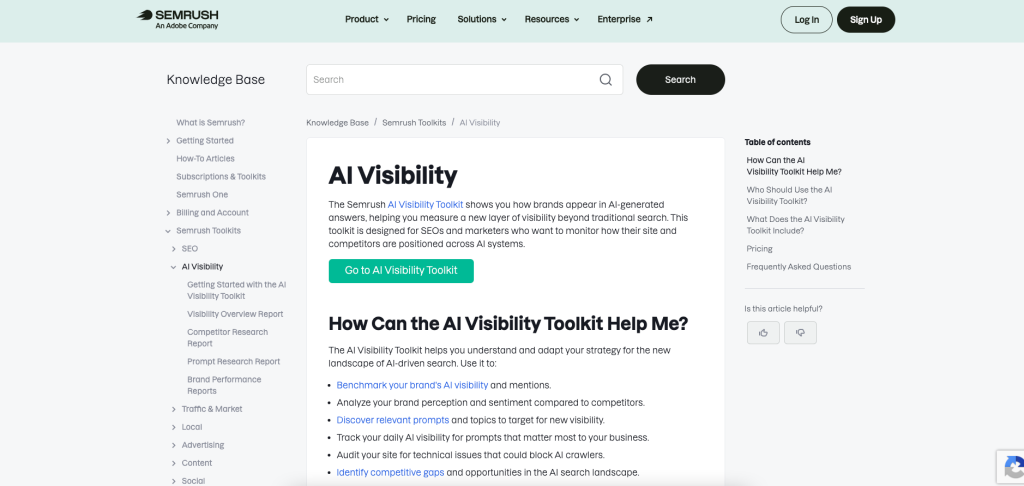
Core Strength: An add-on module inside the Semrush SEO suite that monitors brand visibility across ChatGPT, Google AI Mode, Gemini, and Google AI Overviews, with share-of-voice and sentiment reporting built on a claimed dataset of over 158 million tracked prompts globally.
Pricing: $99/month as a standalone add-on, with no free trial. This sits on top of a base Semrush subscription for full functionality, and some independent estimates put the realistic combined cost around $745/month once bundled.
Best Suited For: Teams already running Semrush for traditional SEO who want AI visibility data inside the same dashboard rather than managing another separate tool.
Pros & Cons: Semrush was named a Representative Vendor in the same 2026 Gartner Market Guide as Evertune, a solid credibility marker. The $99 add-on price is misleading if you’re not already a Semrush subscriber, since the realistic combined cost is much higher.
9. Ahrefs Brand Radar

Core Strength: An add-on module inside the Ahrefs SEO suite tracking brand visibility across roughly 6 AI platforms, combining a static dataset of 250M+ prompts from Google’s “People Also Ask” (updated monthly) with custom prompt tracking updated daily or weekly.
Pricing: Bundled free into the base Ahrefs Lite plan at $129/month, or purchasable standalone at $199/month per individual AI index, or $699/month for all indexes. The $199 entry price is misleading for anyone wanting real custom multi-engine tracking, since meaningful coverage runs closer to $699/month.
Best Suited For: Teams already on Ahrefs Lite or higher who want a taste of AI visibility data bundled in, plus larger teams willing to pay for full custom tracking across all indexes.
Pros & Cons: Free bundled access inside Ahrefs Lite is a nice bonus for existing subscribers. Full, meaningful multi-engine tracking gets expensive fast once you move past the bundled basics.
10. SE Visible (SE Ranking)
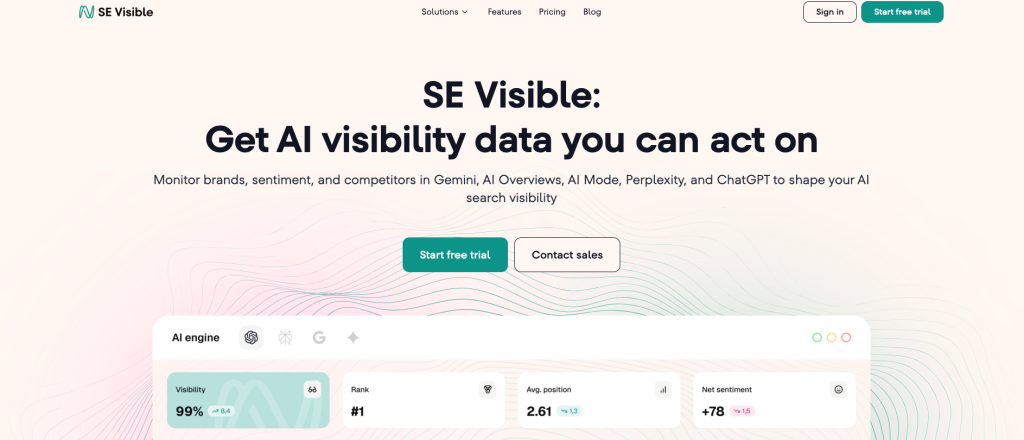
Core Strength: Monitors brand mentions, sentiment, competitors, and top-cited sources across ChatGPT, Gemini, Perplexity, and Google AI Mode/Overviews, branded by SE Ranking as a more standalone-feeling sub-product even though it’s technically an add-on.
Pricing: The base SE Ranking plan runs roughly $103/month, with the AI visibility add-on layered on top costing an estimated $71-276/month depending on prompt volume, for a realistic combined cost in the $150-240+/month range. Confirm current numbers directly with SE Ranking before quoting.
Best Suited For: Teams already using SE Ranking for core SEO who want an affordable way to layer on AI visibility tracking without switching platforms.
Pros & Cons: A 10-day free trial makes it low-risk to test. The pricing structure is the least transparent of the three add-ons covered here, so budgeting takes extra homework.
How to choose
Which one is worth paying for mostly comes down to whether your team already has a subscription to Semrush, Ahrefs, or SE Ranking. If you do, start with the add-on: Semrush AI Visibility Toolkit, Ahrefs Brand Radar, or SE Visible will get you meaningful AI visibility data without adding a new vendor to your stack, and in Ahrefs’ case, some of it is already bundled into your existing plan. If you don’t already pay for one of those suites, or AI visibility is becoming a bigger priority than traditional rank tracking, a standalone platform is the better long-term bet.
Within the standalone group, company size and budget do most of the deciding. Solo consultants and small teams should start with Otterly.AI’s $29/month Lite plan or LLMrefs’ flat $79/month plan, both of which offer real multi-engine coverage without a big commitment. Mid-market teams with more budget to work with should look at Peec AI or Scrunch AI, keeping the pricing caveats above in mind and confirming current numbers directly before signing anything. Enterprise teams that need the widest engine coverage and dedicated support should look at Profound’s Growth or Enterprise tiers, AthenaHQ, or, if paid activation and strategy support matter as much as tracking, Evertune.
Wherever you land, the tool only tells you if you’re showing up. What actually gets you cited is the content and links behind it, and that’s the part of the equation Yaaply focuses on.