
This is a list of the 13 best white-label link building agencies for digital marketing firms, built for a simple reason: outsourcing link building isn’t just about saving time anymore. Margins on in-house outreach have tightened as client expectations rise and outreach teams get harder to staff. A white label link building partner lets an agency keep its brand in front of the client while someone else handles the prospecting, the emails, and the placements.
There’s also a newer pressure in client conversations: AI citation visibility. As more buyers research through AI tools instead of a search bar, clients want to know if their brand shows up in those answers, and quality backlinks remain one of the signals that feeds that visibility. A provider that understands this shift is worth more than one just chasing domain rating numbers.
Below are 13 established providers agencies can consider for reseller link building, what each is actually built for, and where each falls short.
1. FATJOE
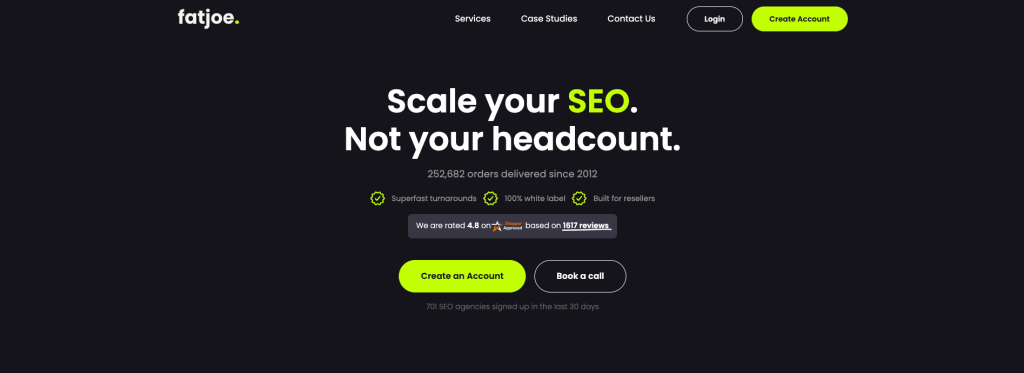
FATJOE is a UK based provider built around a self-serve ordering platform, letting an agency place an order and move on without a sales call or a review cycle. Every link carries a lifetime guarantee, and outreach runs across more than 10 languages for agencies serving international clients.
Core Strength: A fully self-serve, DR-tiered ordering system that publishes work without a review cycle, so orders move fast.
Why Choose Them: Agencies that want to place an order and move on, without a sales call or a back-and-forth approval process, fit this model best.
What Makes It Different: Where a provider like Stan Ventures makes every placement wait for pre-approval, FATJOE trades that review step for speed, so orders go straight to publishing.
Pros & Cons: The speed and self-serve simplicity are the clear advantage. The honest limitation is that this speed comes at a cost: quality has been reported to vary more at the entry-level DR tiers than at the higher ones.
2. Rhino Rank
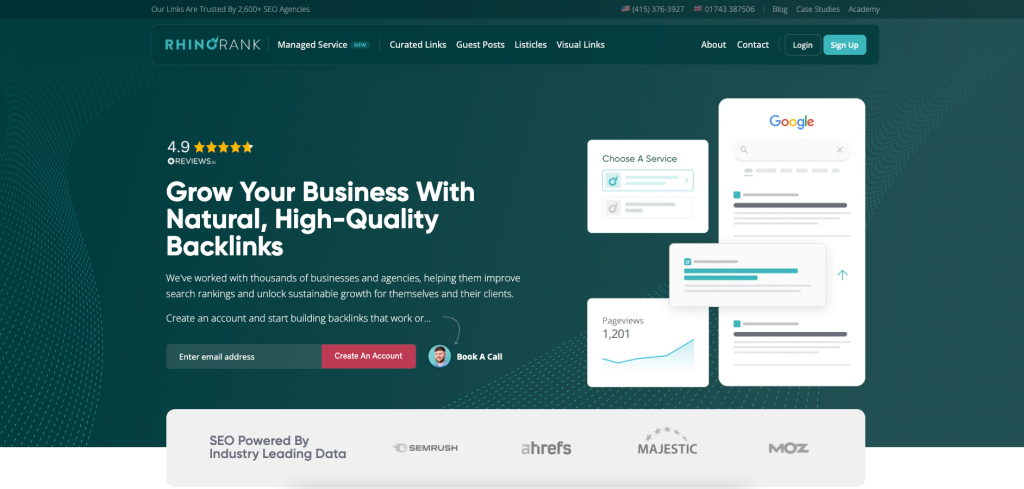
Rhino Rank, also UK based, runs two productized options: curated or niche edit links priced by referring domain count, and guest posts priced by domain rating. There are no contracts and no minimum order sizes.
Core Strength: Organic traffic floors enforced on every placement, so links come from sites people actually visit rather than sites that just score well on paper.
Why Choose Them: Agencies wanting a fully published rate card with no contracts or minimum order sizes, so margin math is simple from day one.
What Makes It Different: Unlike FATJOE, which prices strictly by DR tier, Rhino Rank prices curated links by referring domain count and backs every one with a traffic floor.
Pros & Cons: The traffic floor is a real quality safeguard most competitors skip. The trade-off is that placements go live without domain pre-approval, which is a gap for agencies that need client sign-off before anything publishes.
3. Yaaply
Yaaply is a multi-region focused white label editorial link building agency built entirely around white-hat placements: no PBNs, no link farms, no marketplace spam. Every link ships with a lifetime guarantee and a two-week average delivery window, with transparent Ahrefs DR tracking on every report.
Core Strength: A relevance-first vetting approach rather than a pure DR-chasing model, backed by documented results including a 3x organic performance lift for a photography client and placements for enterprise and DTC brands like Verve AI, PERSOL, Delta Children, Zenflow Hydration, and VitalSkin.
Why Choose Them: Agencies that want editorial-only placements matched to genuine topical relevance, not just a domain rating threshold, and who value white-label reporting they can hand straight to a client, fit best here.
What Makes It Different: Where several providers on this list price primarily by DR tier, Yaaply’s founder has published a public case for relevance over raw DR as the better predictor of durable ranking and citation value, and that thesis shapes how sites get vetted before a placement goes live.
Pros & Cons: The lifetime guarantee and two-week delivery window are strong, client-friendly commitments, and the white-hat-only stance removes the PBN and link-farm risk some volume-first providers carry. The trade-off is scope: this is best suited for agencies prioritizing relevance-matched, editorial-first placements over agencies chasing the largest possible monthly link volume.
4. Stan Ventures

Stan Ventures works with more than 500 agency partners globally and takes a different approach to pricing: instead of one bundled number, the agency sees the real publisher fee separately from a flat service fee.
Core Strength: Full pricing transparency, showing the actual publisher fee split from the service fee, so an agency can see exactly where its margin comes from.
Why Choose Them: Agencies that want to calculate resale margin with real numbers instead of guessing at a bundled rate should look here first.
What Makes It Different: Where FATJOE and Rhino Rank let orders publish instantly, Stan Ventures requires pre-approval on every single placement, trading speed for transparency.
Pros & Cons: The transparent fee split builds trust fast. The honest limitation is that pre-approval slows down ordering compared to the self-serve competitors on this list, and the company’s claimed 70 percent resale margins should be treated as a data point, not a guarantee, since that figure is agency-reported rather than independently audited.
5. Loganix
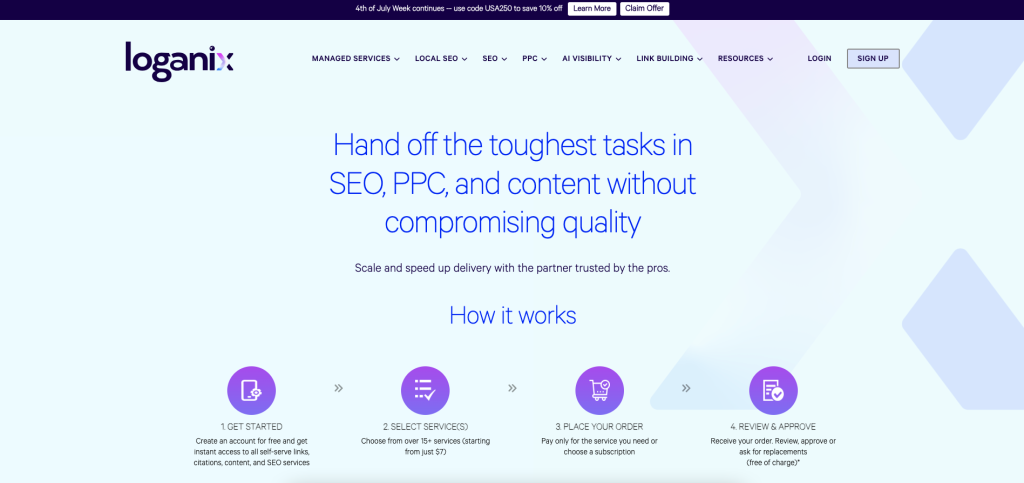
Loganix, based in Canada, covers more link formats than most single providers: guest posts, niche edits, HARO link building, editorial links, and local or branded citations.
Core Strength: The widest link-format range from a single vendor, including HARO link building, which is rare to find at white-label scale.
Why Choose Them: Agencies that want one vendor covering several link formats instead of managing five specialist providers benefit most here.
What Makes It Different: Where a specialist like SAASY LINKS goes deep in one niche, Loganix goes wide, giving an agency one vendor across several link formats.
Pros & Cons: The breadth simplifies vendor management. The trade-off is that breadth comes at the expense of depth, since a provider spread across five formats won’t out-specialize a single-format provider in any one of them.
6. Outreach Monks

Outreach Monks is a Philadelphia based agency founded in 2017, offering DR 30 to 90+ placements with bulk and agency discounts built in, plus managed monthly campaigns. Notable clients include ExpressVPN and ZocDoc.
Core Strength: A wide DR range covered under one roof, from DR30 up to DR90+, paired with an AI-era brand mention strategy layered on top of traditional links.
Why Choose Them: Agencies that need scalable monthly delivery across a broad DR spread, rather than a single premium tier, fit this model well.
What Makes It Different: Compared to Editorial.Link’s DR50+ premium-only floor, Outreach Monks plays across a much wider DR spread instead of gatekeeping at the top.
Pros & Cons: The range gives flexibility across client budgets. The honest catch is that a DR30 placement inside that range won’t carry the same weight as a DR90 one, so agencies need to specify the tier they want rather than assuming consistency across the range.
7. Stellar SEO
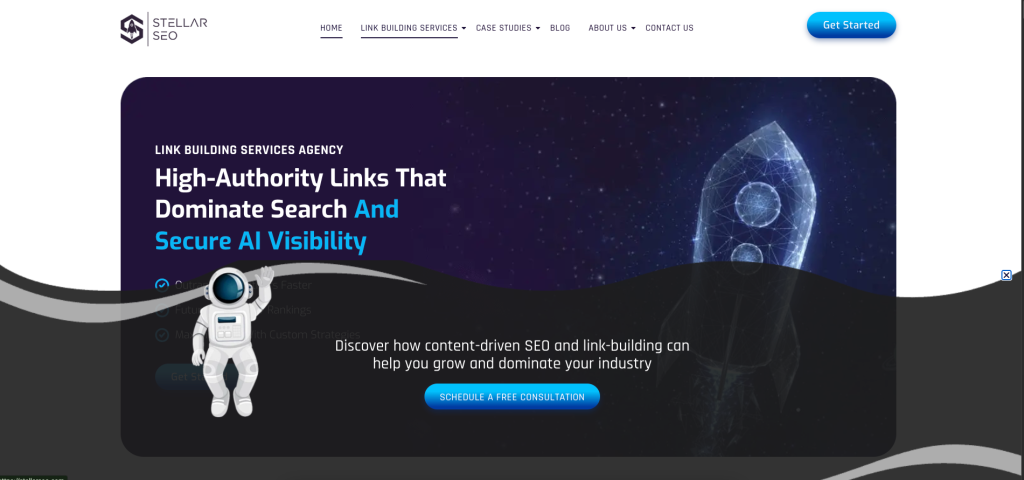
Stellar SEO, a US based provider, leads with strategy rather than volume. Every campaign starts with research and outreach planning before a single link goes live, with all outreach done manually.
Core Strength: The strongest track record on this list in regulated YMYL verticals like legal, finance, and healthcare, where a careless placement can create real risk.
Why Choose Them: Agencies with high-value retainer clients in regulated niches, who need strategy-first planning rather than volume, should start here.
What Makes It Different: Where Outreach Desk vets individual sites after prospecting them, Stellar SEO front-loads strategy before outreach even begins.
Pros & Cons: The upfront strategy work reduces risk in sensitive verticals. The limitation is lead time: this isn’t built for teams that want to place a quick one-off order, and every engagement starts with a scoping conversation before you know what it involves.
8. Outreach Desk
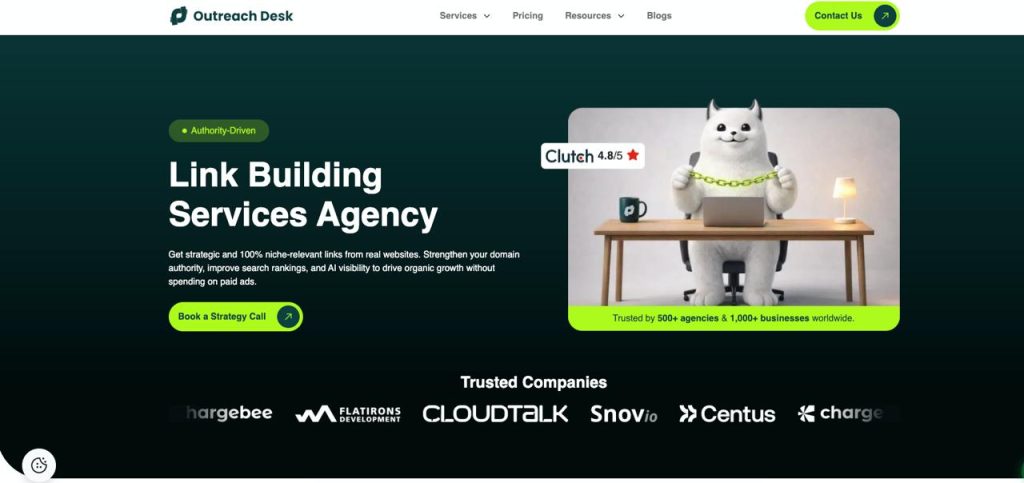
Outreach Desk serves more than 500 agency clients across the US, UK, and EU, and its defining feature is pre-approval on every single placement.
Core Strength: Rigorous per-site vetting, with roughly 70 percent of prospected sites rejected before a placement is even offered, backed by a six month link replacement guarantee.
Why Choose Them: Agencies managing regulated-niche clients who need compliance-grade vetting and documented proof of quality control fit best here.
What Makes It Different: Where Stan Ventures also requires pre-approval, Outreach Desk backs it with a published rejection rate and a replacement guarantee, giving harder proof that the vetting actually happens.
Pros & Cons: The rejection rate and guarantee offer real accountability. That same rigor is the trade-off: this tier of vetting costs more than volume-first providers charge, and the process takes longer than a self-serve order.
9. Editorial.Link
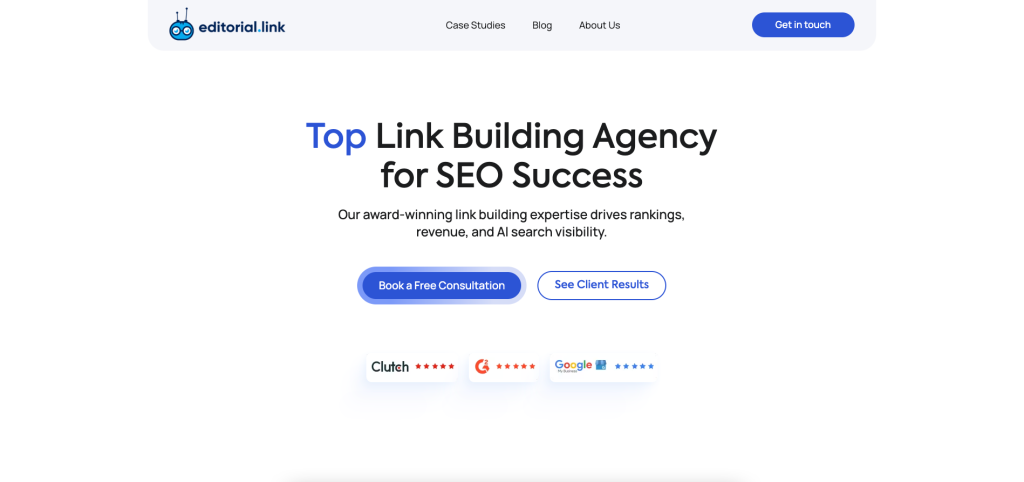
Editorial.Link, based in Eastern Europe, takes a premium approach with a DR 50 minimum and a requirement of 5,000 or more monthly organic visitors on every placement.
Core Strength: Results-based payment, meaning agencies pay after a link goes live rather than upfront, which shifts risk away from the buyer.
Why Choose Them: Agencies serving finance, legal, SaaS, or healthcare clients who need premium, pre-vetted placements should consider this provider first.
What Makes It Different: Where Rhino Rank enforces a traffic floor at any referring domain level, Editorial.Link sets that floor far higher and pairs it with pay-after-publish billing.
Pros & Cons: The pay-after-delivery model reduces risk when testing a new vendor relationship. The honest limitation is that there’s no budget tier here: this is a premium-only provider, and it’s a poor fit for price-sensitive campaigns.
10. LinkBuilder.io

LinkBuilder.io, founded in 2016 and operating across the UK and globally, runs more than 20 distinct link building strategies per engagement. Notable clients include TripAdvisor, Follow Up Boss, and SnackNation.
Core Strength: Country-specific and multilingual campaign capability, paired with a dedicated strategist assigned to every account.
Why Choose Them: Agencies with international or multi-market SaaS clients, who need managed recurring campaigns rather than one-off orders, fit this model well.
What Makes It Different: Where Outreach Monks prices by the individual link, LinkBuilder.io sells ongoing monthly packages with a dedicated strategist attached.
Pros & Cons: The dedicated strategist adds a level of account management most providers don’t offer. The trade-off is flexibility: package-based pricing suits agencies wanting managed, recurring campaigns far more than it suits agencies who want to order in small, irregular batches.
11. The HOTH
The HOTH is a US based full service platform that goes well beyond link building, with a reseller dashboard also covering managed SEO, content writing, local SEO, PPC, and reputation management. The company claims more than 4,000 agency partners.
Core Strength: A single reseller dashboard spanning multiple service lines, not just links, for agencies that want one vendor for everything.
Why Choose Them: Agencies wanting one fulfillment partner across several service types instead of juggling separate vendors for links, content, and local SEO.
What Makes It Different: Where Loganix consolidates several link formats under one vendor, The HOTH goes a step further and consolidates entire service lines, not just link types.
Pros & Cons: The breadth of services simplifies vendor management significantly. That breadth is also the limitation: public reviewer feedback notes quality variance across the lower pricing tiers, which means those placements need extra vetting before they go to a client.
12. Click Intelligence
Click Intelligence is based in the UK, with offices in Cheltenham and London, and also serves the US market. Every order gets a dedicated account manager.
Core Strength: Coverage of specialist and regulated niches including CBD, iGaming, and adult verticals that most other providers on this list avoid outright.
Why Choose Them: Agencies with clients in CBD, iGaming, adult, or other regulated verticals other providers won’t touch should look here specifically.
What Makes It Different: Where Stellar SEO specializes in YMYL verticals like legal and healthcare, Click Intelligence covers a different regulated lane entirely, one that most competitors here won’t touch at all.
Pros & Cons: The specialist niche coverage is a genuine differentiator few others match. The practical limitation for US agencies is that pricing is set in GBP, so every quote needs a currency conversion before it can go into a client-facing proposal.
13. SAASY LINKS

SAASY LINKS, based in the US and working globally, is built exclusively for SaaS and B2B brands, making it the only provider on this list with that specific focus. Notable clients include Uniqode, Snov, and SendPulse.
Core Strength: Purpose-built SaaS placements, including editorial coverage on SaaS and tech publications, listicle placements on best-tools pages, and an integrated AI/GEO visibility strategy.
Why Choose Them: Agencies whose client roster is predominantly B2B SaaS, and where AI search visibility is part of the deliverable, fit this provider best.
What Makes It Different: Where Loganix spreads across five link formats to serve any client type, SAASY LINKS goes narrow and deep in exactly one.
Pros & Cons: The SaaS-specific focus means every placement is genuinely relevant to that audience. That focus is also the limitation: it’s a poor fit for agencies whose client roster isn’t predominantly SaaS, and pricing isn’t publicly listed, so every deal starts with a sales conversation.
How to narrow this down to 2 or 3
Client type should drive the shortlist more than price per link. Agencies with a mostly SaaS book of business will get the most relevant placements from SAASY LINKS or LinkBuilder.io, both built around SaaS publications and audiences.
Agencies carrying regulated or YMYL clients (legal, finance, healthcare) should look at Stellar SEO or Editorial.Link, since both are built around the pre-approval and vetting rigor those niches require, while Click Intelligence is the one to call for clients in CBD, iGaming, or adult verticals specifically.
Agencies that need to move real volume across a broad client roster are better served by Outreach Monks, The HOTH, or FATJOE, all of which are structured for scale rather than for a single premium tier. And agencies working with a tight per-link budget will find Rhino Rank and FATJOE the easiest to plug into a margin model, since both publish fixed, DR-tiered rate cards with no negotiation required.
For agencies that weigh topical relevance over a pure DR threshold and want a white-label partner built around that philosophy specifically, Yaaply is worth the same close look given to any provider on this list.