
Finding the best backlink analysis tools used to be about counting links and chasing a higher domain score. Search results increasingly blend AI generated answers with traditional listings, and the sites that get cited inside those AI summaries tend to already have strong, relevant editorial links pointing at them. A messy or thin backlink profile does not just hurt your rankings anymore, it can keep you out of the conversation entirely.
That shift changes what good backlink data actually looks like. Raw link counts matter less than they used to. What matters more is whether the links come from credible, topically relevant sources, since those are the same signals that tools and AI systems use to decide who to trust and cite. It is part of why some SEO teams, including Yaaply, have started treating editorial links less like ranking fuel and more like citations that build authority over time.
To keep up with that shift, you need software that can show you where your links, and your competitors’ links, are coming from, how trustworthy they are, and whether any of them are quietly working against you. Here are 10 backlink analysis tools worth using in 2026, along with how to combine them into an actual workflow.
1. Ahrefs
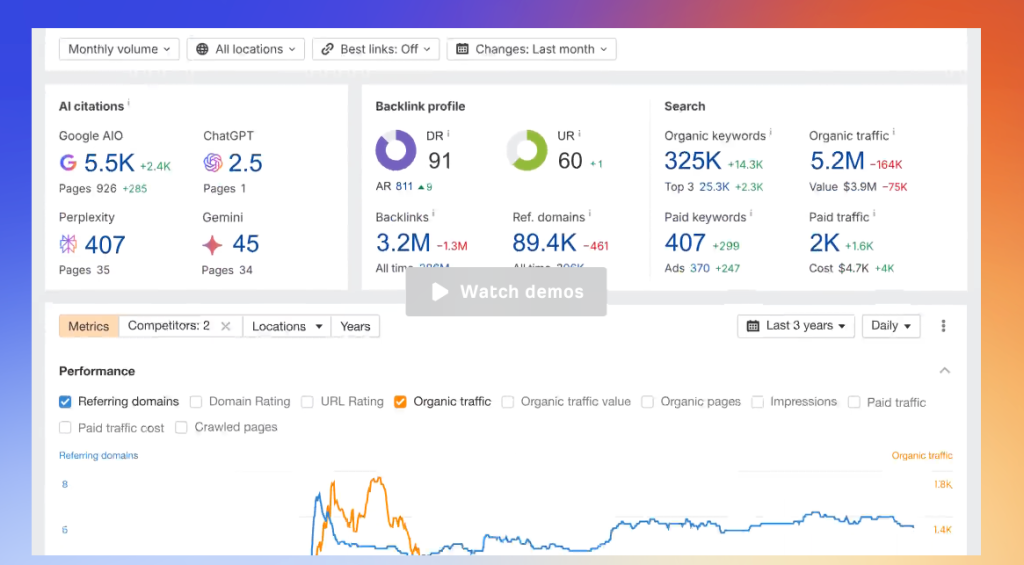
Ahrefs is the tool most agencies default to when they need a full picture of a domain’s link profile. Its backlink index tracks 35 trillion backlinks and refreshes every 15 minutes, so the data you are looking at stays close to real time. Beyond basic Domain Rating and URL Rating scores, its Link Intersect and Backlink Gap tools let you compare your link profile against up to five competitors side by side, which helps you spot link opportunities you might have missed. There is a free option, Ahrefs Webmaster Tools, though it is limited compared to the paid plans. Paid pricing starts at $29 a month for Starter and climbs to $449 a month for Advanced, with Lite and Standard in between. Ahrefs suits agencies and enterprise teams that need deep, frequently updated data rather than a quick check.
2. Semrush
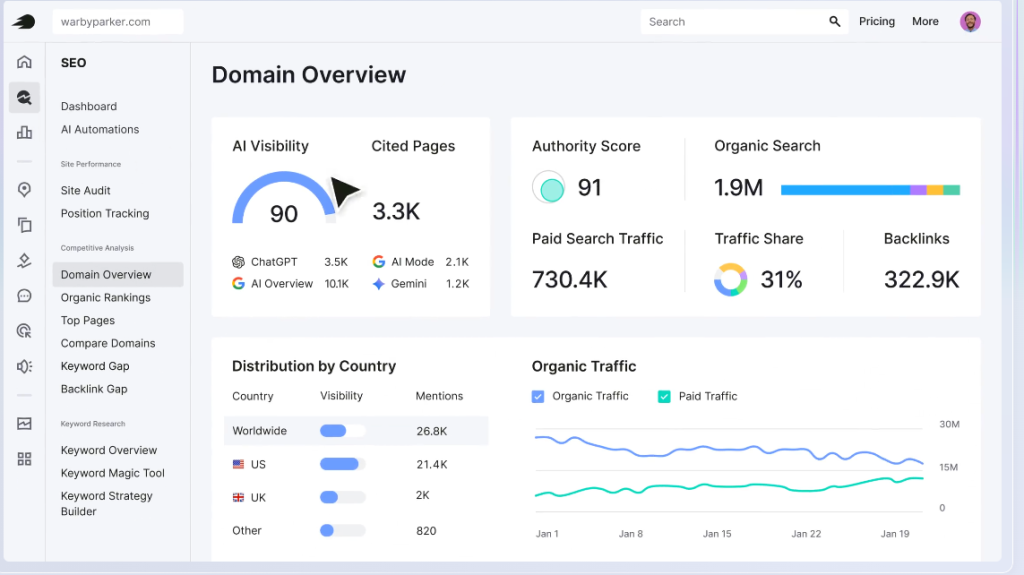
Semrush is built for teams that want backlink analysis folded into a broader SEO and content toolkit rather than a standalone product. Its backlink index covers 43 trillion links, and the Backlink Audit feature automatically flags toxic links and helps build a disavow file, which saves time during cleanup work. Backlink Analytics also runs a Backlink Gap comparison against up to five competitors, and real time alerts notify you when new links appear or disappear. Anyone can pull 10 backlink reports a day for free without signing up, which is handy for quick checks. Paid plans run from $139.95 a month for Pro up to $499.95 a month for Business. Semrush fits agencies that want a single platform covering SEO, PPC, and content alongside link building software.
3. Moz Pro
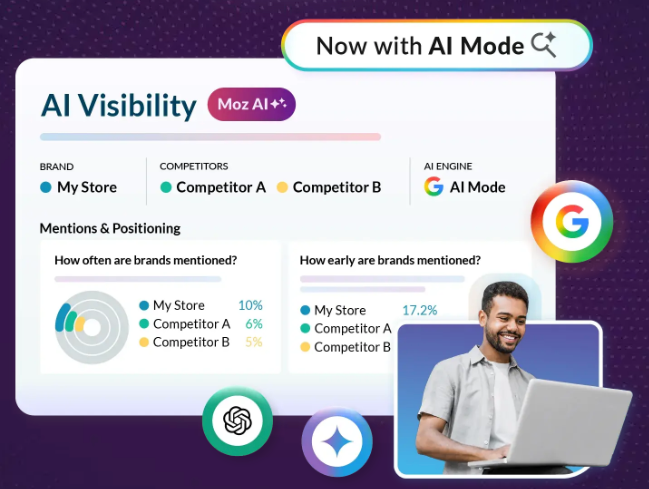
Moz Pro is one of the more recognizable names in link building software, largely because of its Domain Authority and Page Authority scores, which plenty of marketers still use as a quick shorthand for site strength. Its Spam Score flags links that look risky, and Link Intersect finds sites linking to competitors but not to you. The free MozBar browser extension is a nice bonus for checking authority scores while you browse. Free users get 10 Link Explorer queries a month, and paid plans start at $49 a month for Starter, moving up to $99, $179, and $299 for Standard, Medium, and Large. Moz Pro tends to suit solo SEOs and smaller agencies who want a lower cost DA and PA metric without a steep learning curve.
4. Majestic
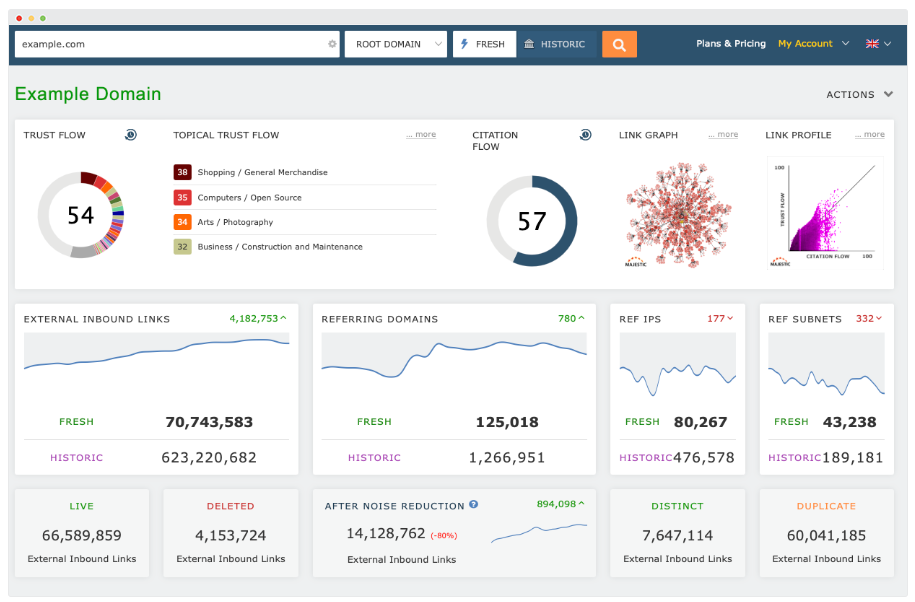
Majestic takes a different approach to scoring links, using Trust Flow and Citation Flow instead of the DR or DA metrics other tools rely on. Topical Trust Flow adds another layer by showing which subject areas a site’s links come from, useful when relevance matters as much as raw authority. Its Clique Hunter feature finds sites that link to several competitors at once, a handy shortcut for outreach targets. Majestic’s Historic Index also stretches back to 2008, giving it more historical depth than most competitors. A free Chrome extension shows backlink counts, while paid plans run from $49.99 a month for Lite to $99.99 for Pro and $399.99 for API access. It is a strong pick for link building specialists who want historical context on a domain’s link growth.
5. SE Ranking
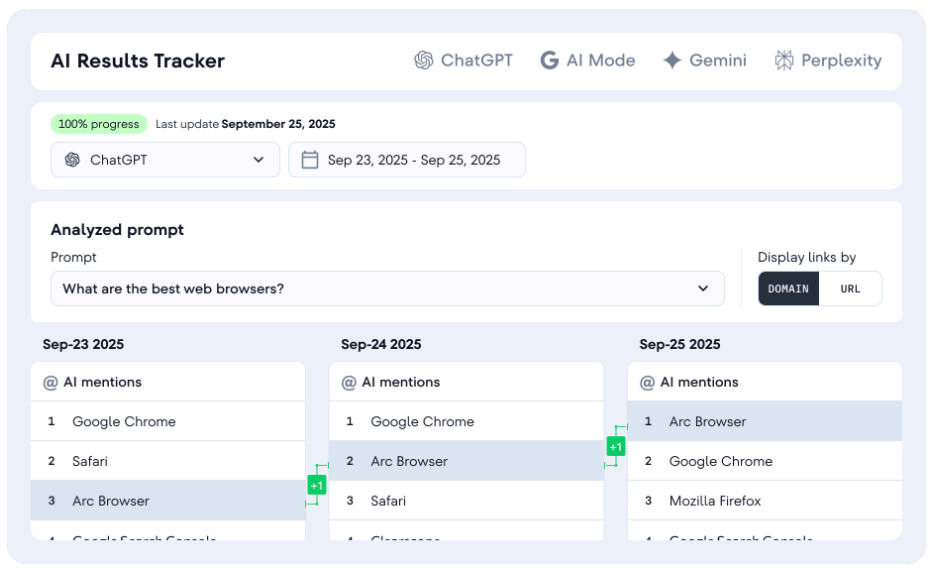
SE Ranking is often the tool people land on when they want Semrush level features without the Semrush level price tag. Its backlink database covers 3 trillion links, smaller than some competitors but still substantial, and it scores links using Domain Trust and Page Trust alongside a Toxicity Score for flagging risky ones. Backlink Gap analysis against up to five competitors and a dedicated Backlink Monitor round out the feature set. A 14 day free trial with no card required makes it easy to test before committing. Paid plans start at $65 a month for Essential and go up to $259 for Business. SE Ranking suits freelancers and mid sized agencies who want most of the bigger platforms’ features at 40 to 60 percent lower cost.
6. Mangools / LinkMiner
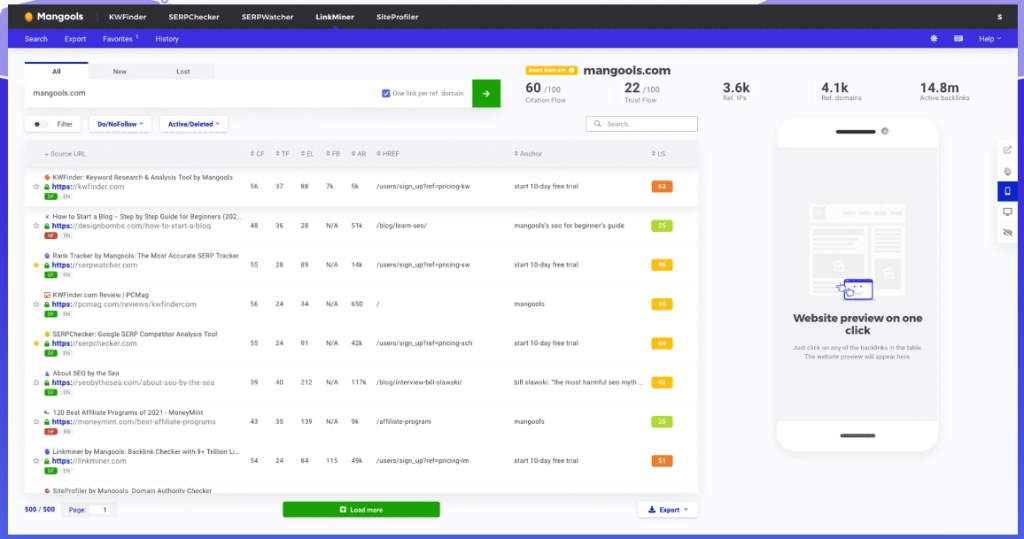
Mangools, through its LinkMiner tool, is aimed squarely at solo SEOs and people newer to link building who want something affordable and easy to use. Its link database covers 9.5 trillion links, and every result comes with a Link Strength score along with a live preview of the linking page, so you do not have to click away to check context. A Favorites list lets you save promising links for outreach later, a nice touch for anyone doing manual link building. There is a limited free plan to get a feel for the tool. Paid pricing starts at $49 a month for Basic, or $29.90 a month billed annually, with Premium at $69 and Agency at $129. Mangools works well for solo operators and beginners who want an affordable, approachable suite.
7. Ubersuggest
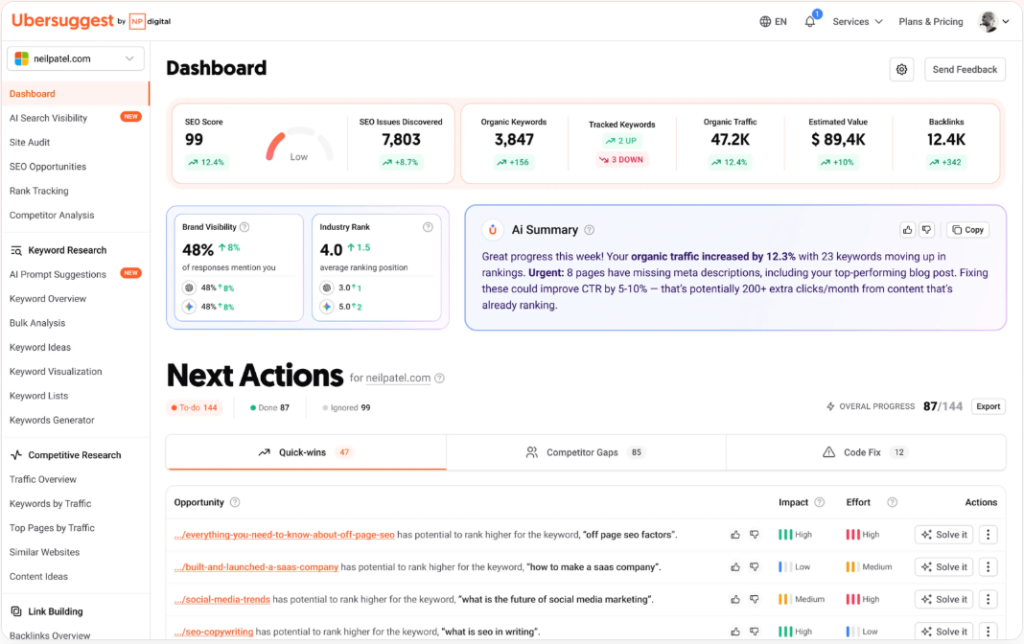
Ubersuggest, from Neil Patel Digital, is built for people who want backlink data without paying enterprise prices. It offers Domain Authority scoring, referring domain counts, and the ability to compare your link profile against up to five competitor domains, plus a Content Gap feature for finding topic opportunities tied to your link strategy. A free tier with 3 searches a day covers occasional checks. Paid plans start remarkably low at $12 a month for Individual, $20 for Business, and $40 for Enterprise, and lifetime licenses run $120 to $400 for people who would rather pay once. Ubersuggest is best for solopreneurs and beginners who want the essentials of link building software at the lowest possible price point.
8. Linkody
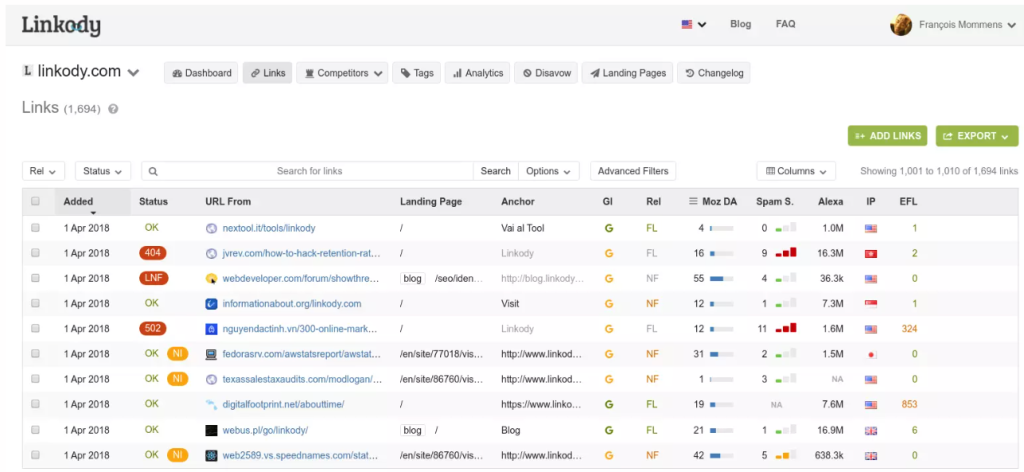
Linkody is less about deep one time audits and more about keeping watch over the links you already have. It monitors your backlink profile around the clock and sends email alerts whenever a link’s status changes, so you know quickly if a valuable link goes nofollow or disappears. Each link comes with DA, PA, and a spam score, and you can track up to five competitor domains alongside your own. A built in disavow tool rounds out the feature set for cleanup work. A 30 day free trial is available to test it out. Paid plans start at $14.90 a month for Webmaster and rise to $24.90, $49.90, and $99.90 for Advanced, Pro, and Agency. Linkody suits freelancers and small agencies who want a dedicated watchdog rather than an all in one platform.
9. cognitiveSEO
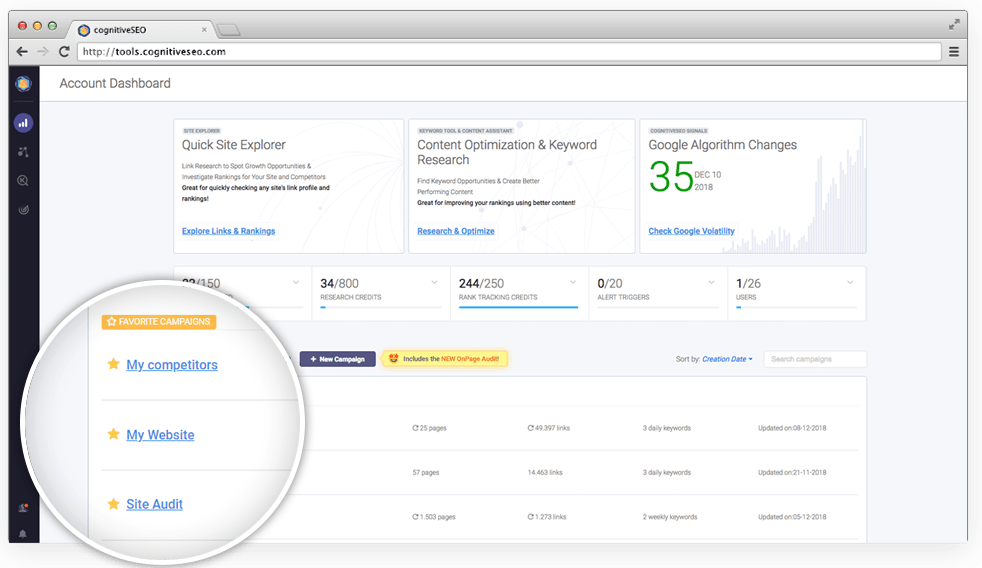
cognitiveSEO is built with a specific problem in mind: cleaning up a link profile that has already caused trouble with Google. Its Unnatural Link Detection flags patterns that look manipulative, and Link Velocity Trends show whether your link growth looks natural or suspicious over time. It also includes integrated disavow tools and workflows specifically designed for penalty recovery, alongside standard competitor comparison features. A 7 day free trial lets you test the platform before paying. Plans start at $129.99 a month for Starter, then $199 for Premium and $499 for Elite. cognitiveSEO is the right call for agencies that regularly handle Google penalty recovery or need to clean up toxic links for a client.
10. LinkResearchTools (LRT)
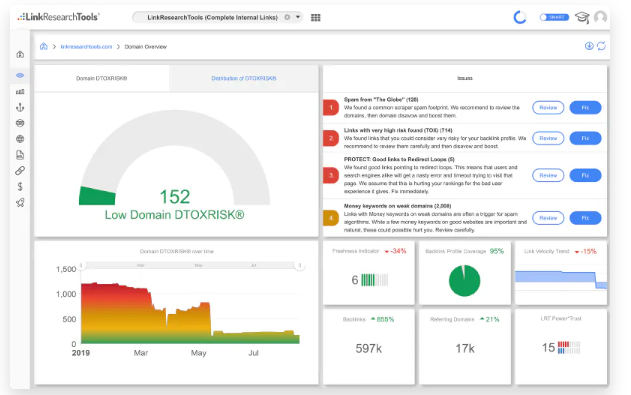
LinkResearchTools takes a different approach by pulling data from more than 24 outside sources, including Ahrefs, Majestic, Moz, and Google Search Console, and combining it into one view rather than relying on a single proprietary index. Its Link Detox feature checks links against more than 100 risk factors to identify toxic ones, and Link Detox Boost helps prioritize which links to address first. This makes it especially useful for cross validating link data rather than trusting one source alone. Officially listed pricing starts at $499 a month for the Superhero plan and $999 for Superhero Plus, though a $17, 7 day trial is available; full pricing beyond the trial is not clearly published, and the figures above come from third party reporting rather than an official rate card. LRT suits enterprise teams running large scale penalty recovery or audits that need multiple data sources cross checked.
How to actually use these tools together
Most teams do not need to pick just one of these tools, and honestly, no single tool covers everything well. A common setup is to use a large index tool like Ahrefs or Semrush as your main source of truth for competitor research and Backlink Gap analysis, since their index size and update frequency give you the broadest view. From there, a dedicated monitoring tool like Linkody can sit in the background and alert you when something changes, so you are not manually rechecking link status every week.
If you ever run into a manual action or a spam heavy link profile, that is when a specialist like cognitiveSEO or LinkResearchTools earns its cost, since both are built specifically for toxic link detection and penalty recovery rather than general reporting. Budget conscious teams can lean on SE Ranking, Mangools, or Ubersuggest for most of the same core metrics at a fraction of the price, then add Moz Pro or Majestic when they specifically want DA/PA or Trust Flow scoring for client reporting. The goal is not to subscribe to everything at once, it is to match the tool to the job in front of you.
If building out a stronger link profile is the part that feels hardest, Yaaply’s link building service is one option for teams that would rather hand off the outreach side while they focus on everything these tools are measuring.