
12 Best SEO Competitor Analysis Tools in 2026 (Free and Paid)
Quick answer: 12 Best SEO Competitor Analysis Tools in 2026 (Free and Paid) comes down to matching the tool to the actual question you’re asking. Semrush and Ahrefs cover the most ground for teams that need organic, paid, and backlink data in one place. Moz Pro and Serpstat are the easier on-ramps for teams newer to competitor research. SpyFu, Mangools, and Ubersuggest exist for a reason: not everyone needs an enterprise-grade database to answer “why is this competitor outranking me.” No single tool below claims to be the only one worth buying. Pick based on the question you’re actually trying to answer, not the longest feature list.
1. Semrush
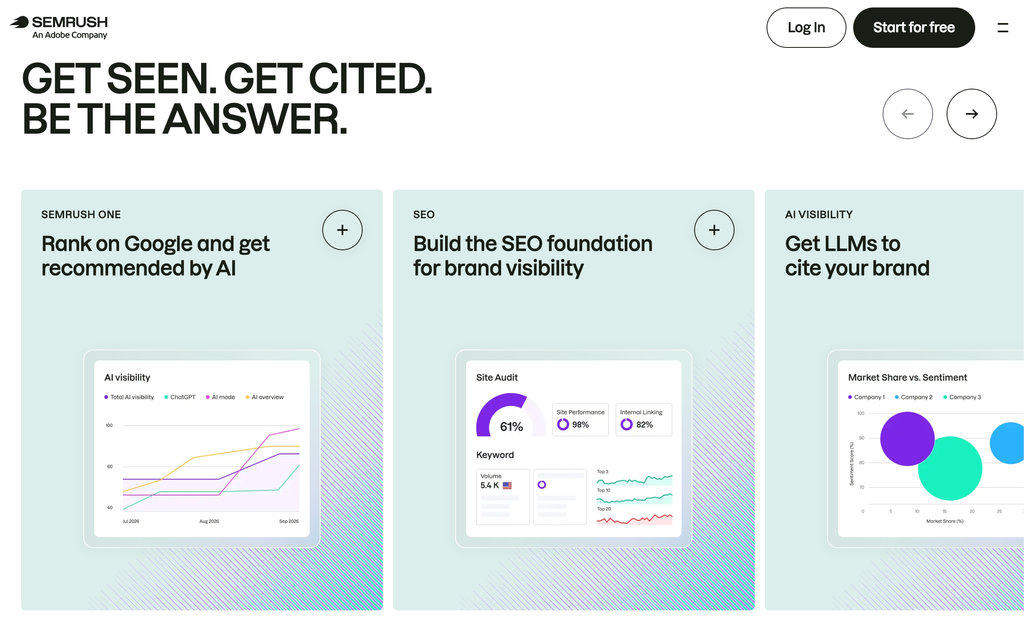
Best Use Cases: Agencies and marketing teams that need organic, paid, and content competitor data in a single dashboard instead of stitching together several tools.
Powerful Features: The Organic Research report shows a competitor’s entire keyword universe alongside ad history and traffic estimates. Keyword Gap and Backlink Gap reports surface exactly where a competitor is beating you. Traffic Analytics breaks a rival’s traffic down by channel, geography, and device. An AI search visibility tracker shows how competitors appear in ChatGPT and Google AI Mode, not just traditional search.
When to Use It: When one platform covering SEO, PPC, and content competitor data is worth paying more for than juggling three separate subscriptions.
Pros:
• Broadest all-in-one competitor toolkit on this list
• Large keyword and traffic database
• AI search visibility tracking included
Cons:
• One of the more expensive options here
• The sheer volume of data can overwhelm teams new to competitor research
Pricing: Free plan with limited daily searches; paid plans from $139.95/month (Pro).
2. Ahrefs

Best Use Cases: Backlink-driven competitor research and content gap analysis.
Powerful Features: Site Explorer surfaces a competitor’s referring domains, anchor text, and newly gained or lost links. Content Gap identifies keywords competitors rank for that your site does not. Keywords Explorer and Rank Tracker are included on every paid tier.
When to Use It: When comparing backlink profiles matters as much as comparing keyword overlap.
Pros:
• Industry-leading backlink index
• Strong, well-regarded content gap tool
• Frequent data refresh on higher tiers
Cons:
• Pricing climbed noticeably after the 2026 tier restructuring
• The entry-level Starter plan’s credit system is restrictive for regular use
Pricing: Free plan available; paid plans from $29/month (Starter), with the Lite plan most competitor-research users actually need starting at $129/month.
3. Moz Pro

Best Use Cases: Small business owners and marketing teams who are new to SEO competitor research.
Powerful Features: The keyword gap analysis tool compares your rankings directly against competitors. The Link Intersect report shows exactly which sites link to your competitors but not to you.
When to Use It: When you want reliable competitor data without a steep learning curve on day one.
Pros:
• The most beginner-friendly interface among the major all-in-one suites
• Clean reporting that doesn’t require weeks to learn
Cons:
• Keyword and backlink databases are smaller than Ahrefs or Semrush
Pricing: From $99/month (Standard); 30-day free trial available.
4. SE Ranking
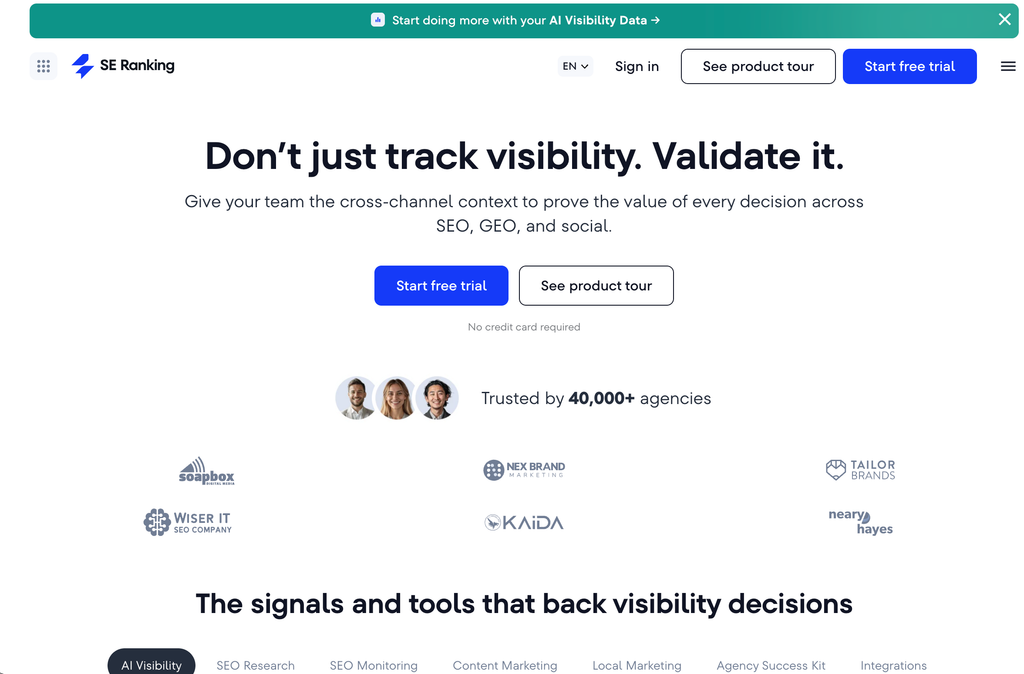
Best Use Cases: Small to mid-size agencies that want an all-in-one competitor toolkit at a lower price point than Semrush or Ahrefs.
Powerful Features: Competitor tracking, rank tracking, and backlink monitoring are bundled with an optional AI visibility add-on that tracks brand mentions inside ChatGPT and Perplexity.
When to Use It: When budget matters more than owning the single largest database on the market, and a full toolkit is still the goal.
Pros:
• Meaningfully cheaper entry point than Semrush or Ahrefs
• Daily update frequency on core rank-tracking metrics
• AI-search visibility add-on available
Cons:
• SE Ranking restructured its plan names and pricing in April 2026, so current figures should be double-checked before quoting a client
Pricing: [Verify before publishing.] SE Ranking renamed its tiers in April 2026 (Essential/Pro/Business became Core/Growth/Enterprise); entry-level pricing has recently landed in the roughly $44 to $65/month range depending on billing cycle and region.
5. SpyFu
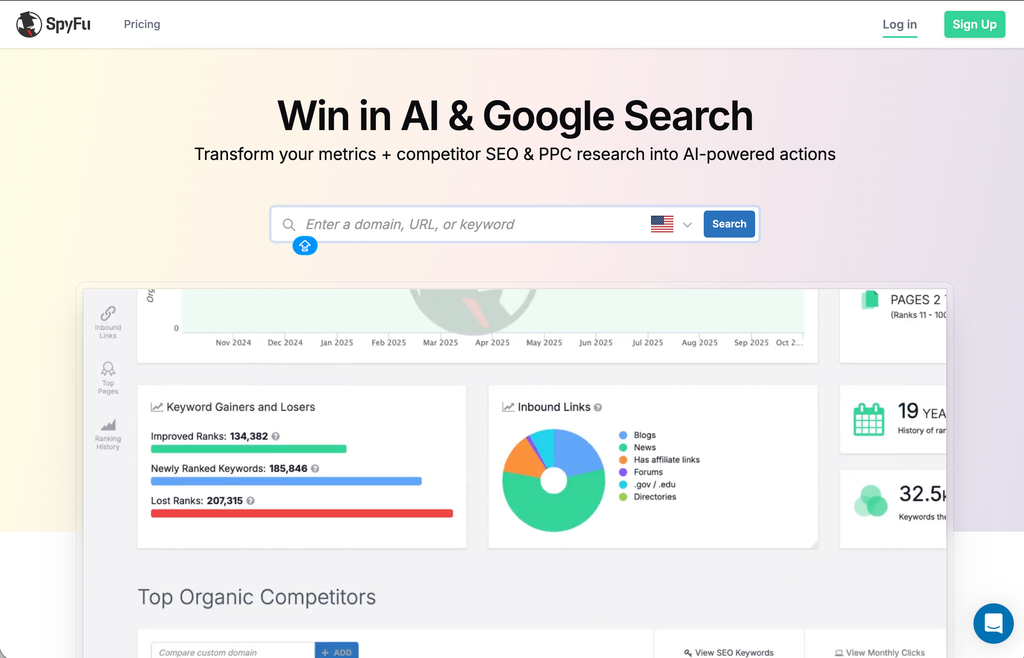
Best Use Cases: Competitor keyword and PPC ad-history research on a tighter budget.
Powerful Features: SpyFu shows a domain’s complete paid and organic keyword history, including historical ad copy and estimated spend. The Kombat tool compares keyword overlap across up to three domains at once.
When to Use It: When PPC competitor intelligence matters as much as organic data, and budget is a real constraint.
Pros:
• Affordable entry price relative to the major suites
• Strong historical ad data going back years
• Simple, low-learning-curve interface
Cons:
• Rank tracking updates weekly rather than daily
• Smaller keyword database than Ahrefs or Semrush
Pricing: From $29/month (Basic, billed annually); Pro+AI from $89/month (billed annually).
6. Similarweb
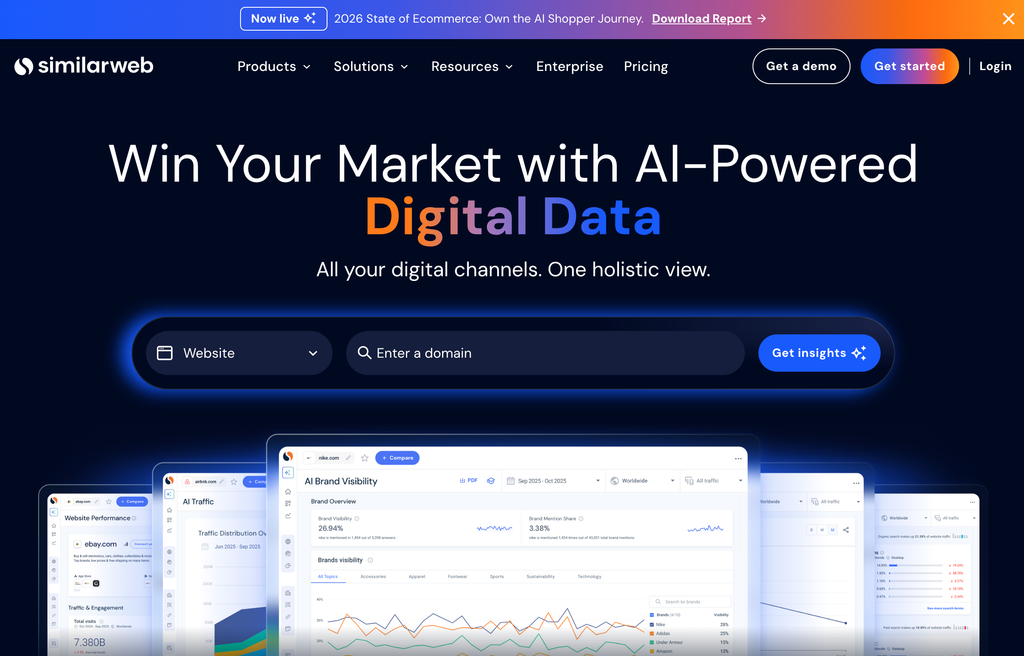
Best Use Cases: Understanding a competitor’s total traffic volume and channel mix, not just their organic search performance.
Powerful Features: Traffic and engagement estimates broken out by channel, customer demographic data, and a marketing channel overview spanning organic, paid, referral, and social traffic.
When to Use It: When the real question is “how much total traffic does this competitor get and where does it come from,” rather than “what keywords do they rank for.”
Pros:
• Strongest traffic-estimation data on this list
• Covers channels that SEO-only tools don’t touch
Cons:
• SEO-specific competitor features are thinner than dedicated SEO suites
• Price increases quickly once SEO or advertising modules are added
Pricing: From $125/month (Competitive Intelligence plan); adding SEO or ads modules raises the price substantially.
7. Serpstat
Best Use Cases: Teams that want keyword research, site audit, and competitor backlink data in one affordable dashboard.
Powerful Features: A domain comparison tool puts your SEO metrics side by side with multiple competitors. Content gap analysis and batch keyword and backlink analysis are both included.
When to Use It: When you want an Ahrefs-or-Semrush-style feature set without the top-tier price.
Pros:
• Clean, beginner-friendly interface
• More affordable than the two biggest names in the category
• Fast project setup
Cons:
• Smaller underlying database than Ahrefs
• Some advanced features take extra digging to find
Pricing: From $59/month (Individual plan).
8. Sistrix
Best Use Cases: Agencies and analysts focused specifically on European search markets.
Powerful Features: A proprietary Visibility Index tracks a domain’s overall search presence over time, alongside strong SERP feature tracking and deep coverage of European-language search markets.
When to Use It: When European search visibility data matters more than the largely US-centric databases most competitors are built on.
Pros:
• Deep European market data that most US-built tools don’t match
• Daily SERP data updates
Cons:
• Less useful for teams focused purely on the US market
• Euro-based pricing shifts in dollar terms with exchange rates
Pricing: From approximately €119/month.
9. Mangools
Best Use Cases: Bloggers, solo SEOs, and beginners who want core competitor metrics without a steep learning curve or a high price tag.
Powerful Features: KWFinder surfaces competitor keyword overlap, SERPWatcher tracks ranking changes daily, and SERP Checker breaks down what’s already ranking for a target keyword.
When to Use It: When you need the core five SEO tools without paying for enterprise-scale capacity you won’t use.
Pros:
• Most affordable full toolkit on this list
• Simple, minimalist interface
• Daily rank tracking included on every plan
Cons:
• Keyword and backlink databases are noticeably smaller than the major suites
• Not built for large-agency-scale reporting
Pricing: From $29.90/month (Basic); $44.90/month (Premium).
10. SEO PowerSuite
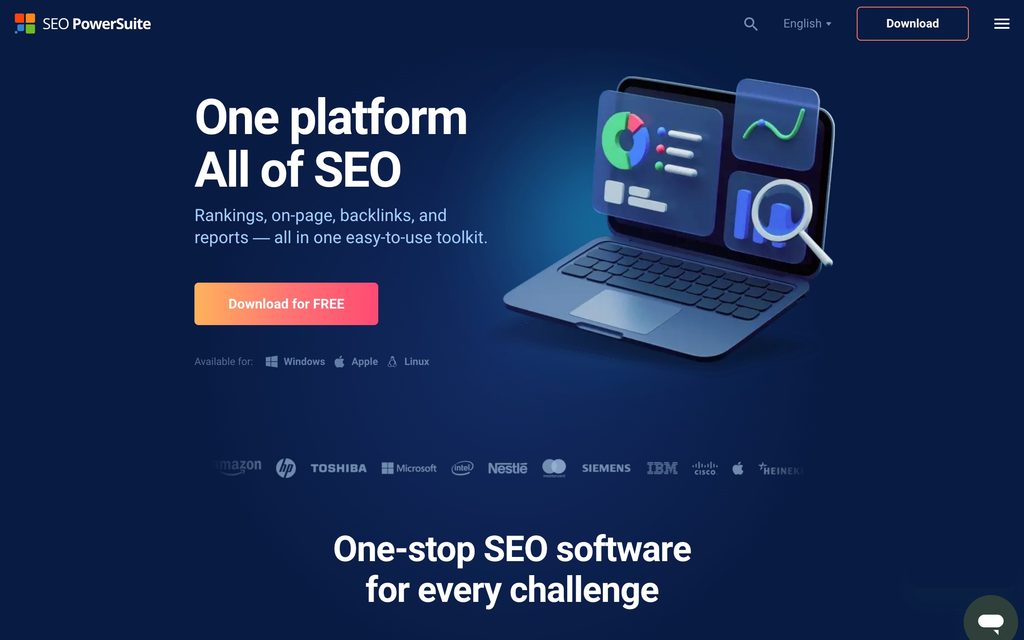
Best Use Cases: Freelancers and agencies who would rather own their SEO software outright than pay an ongoing monthly subscription.
Powerful Features: Four bundled desktop applications: Rank Tracker, WebSite Auditor, SEO SpyGlass for backlink analysis, and LinkAssistant for outreach. Competitor backlink profiles can be compared across up to five sites at once.
When to Use It: When a flat annual license makes more financial sense than a recurring per-seat SaaS fee, particularly for solo operators.
Pros:
• No monthly per-seat fees
• Runs locally on Windows, Mac, or Linux
• Includes a genuinely usable free tier
Cons:
• Desktop-based rather than cloud, so there’s no real-time team collaboration
• Interface feels dated next to newer cloud-based tools
Pricing: [Verify before publishing.] Free plan available; paid plans reported between roughly $299 and $349/year for the Professional tier depending on source.
11. Ubersuggest
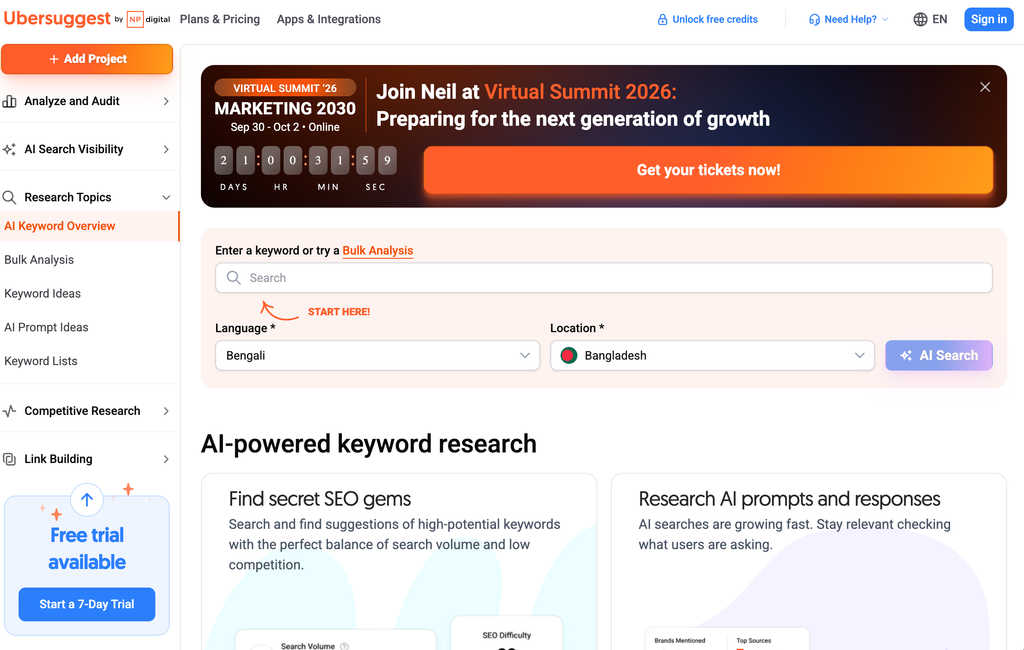
Best Use Cases: Freelancers and small businesses wanting a low-cost entry point into competitor and keyword research.
Powerful Features: A competitor domain overview, content gap analysis, and backlink tracking, built by Neil Patel’s team as a budget alternative to Ahrefs or Semrush.
When to Use It: When budget is the primary constraint and enterprise-scale data depth isn’t required.
Pros:
• Lowest price point on this list for a full SEO toolkit
• Simple enough for non-specialists to use immediately
Cons:
• Shallower keyword and backlink database than the premium tools
• Fewer advanced filtering options
Pricing: From $29/month (Basic).
12. BuzzSumo
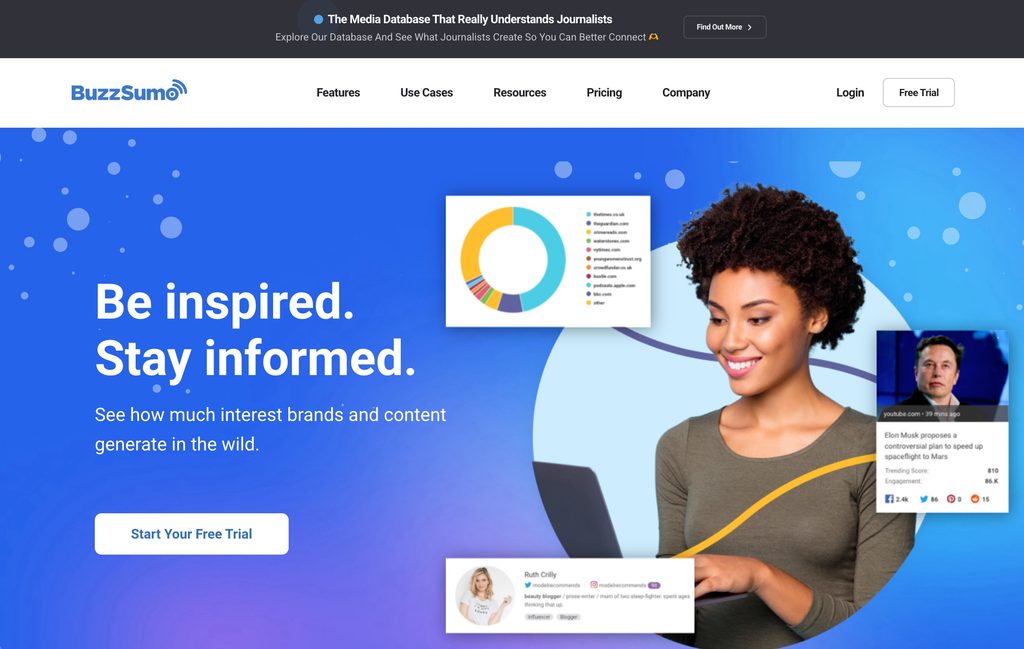
Best Use Cases: Content marketers who need to see which competitor content and topics are actually earning shares and engagement.
Powerful Features: Content performance analysis across Facebook, X, Pinterest, and Reddit, competitor content monitoring, and influencer discovery tied to a topic or competitor.
When to Use It: When the competitive question is “what content is working for them,” not “what keywords do they rank for.”
Pros:
• Strongest content-and-social angle on this list
• Genuinely useful for influencer and outreach research
Cons:
• One of the pricier tools on this list relative to what it covers
• Several reviewers flag the price as steep for smaller teams
Pricing: From $199/month.
Where to Start
Twelve tools is too many to run at once, so here’s a practical starting point. If you can only justify one subscription, Semrush or Ahrefs covers the widest range of competitor questions in a single platform, organic, backlinks, and content in one place. If budget is the real constraint, Serpstat or Mangools gives you the core organic and backlink workflow at a fraction of the price, and SpyFu is worth adding specifically when PPC competitor data matters too. Save Similarweb for when the question shifts from “what keywords do they rank for” to “how much total traffic do they actually get.” Add BuzzSumo only once content and social performance becomes a recurring research need, not a one-off check. Most teams run two tools well before they need three.
FAQ
Do I need more than one competitor analysis tool?
Most teams don’t. One all-in-one platform (Semrush, Ahrefs, or a mid-tier option like Serpstat) covers organic and backlink research. A second tool is only worth adding when you have a specific gap, such as content and social monitoring, which is where BuzzSumo comes in.
What’s the real difference between Ahrefs and Semrush for competitor research?
Ahrefs is generally stronger for backlink and content-gap research. Semrush has the broader marketing toolkit, including PPC and a social tracker, on top of its organic and keyword data.
Is there a genuinely free option on this list?
Semrush, Ahrefs, and SEO PowerSuite all offer usable free tiers with meaningful limits. None of the free tiers replace a paid plan for serious ongoing competitor tracking, but they’re enough to evaluate whether a platform fits before paying.
Which tool is best for a small agency on a tight budget?
SE Ranking, Serpstat, and Mangools all sit well below Semrush and Ahrefs on price while still covering the core competitor-research workflow: keyword gaps, rank tracking, and backlink data.
Do any of these tools track AI search visibility, not just Google rankings?
Yes. Semrush and SE Ranking both offer AI search visibility tracking that shows how a domain appears in tools like ChatGPT and Google AI Mode, in addition to traditional rankings.
—————
Running competitor analysis yourself is one thing. Turning what you find into editorial placements and digital PR that actually move the needle is where most in-house teams run out of time. That’s the specific gap Yaaply’s link building work is built to close. Get in touch if that’s where you’re stuck.